
Understand The IRS Form 1099-C And 1099-C Statute Of Limitations

IRS Form 1099-C reports certain canceled debts. Specified creditors generally file it for reportable cancellations of $600 or more; that reporting threshold does not make smaller canceled amounts tax-free. Whether you owe tax depends on the actual cancellation, the tax year and any applicable exception or exclusion.
Receiving a 1099-C does not always mean the reported amount is taxable. Review the actual cancellation and any applicable exception or exclusion before deciding what belongs on your return. If the resulting tax balance is more than you can pay, you can review available tax-debt options through a free, no-obligation evaluation. Reporting questions should go to IRS guidance or a qualified tax professional.
What is IRS Form 1099-C?
Form 1099-C is an information return prepared by a creditor subject to the reporting rules. It identifies a reported debt cancellation or other reportable event. Receiving the form alone does not settle whether a creditor can still collect: if collection continues or the information is wrong, contact the creditor and verify what happened before determining the tax treatment.
But why does this matter? Because in the eyes of the IRS, canceled debt is often treated as taxable income. That means you could end up owing taxes on money you never actually received in cash—just debt that disappeared.
However, not all canceled debts are taxable. Some exceptions exist, such as:
- If the debt was discharged in bankruptcy.
- If you were insolvent (your total debts were greater than your total assets) at the time.
- If the debt was related to certain student loan forgiveness programs.
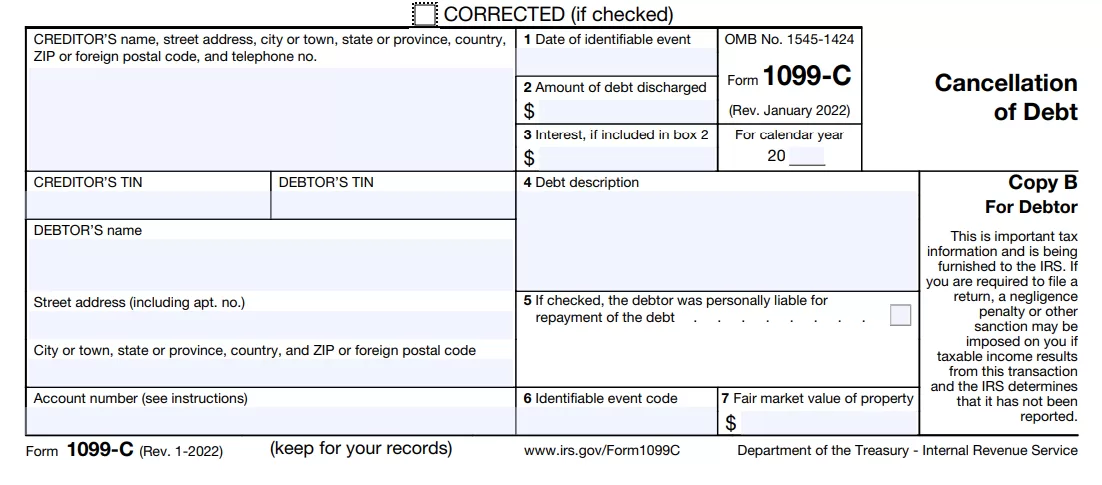
Example Of IRS Form 1099-C
Seeing an actual 1099-C form can help you better understand what to look for. This form includes details like the amount of canceled debt, the creditor’s information, and the date of cancellation. Below is an example of how it looks, so you can recognize key sections when reviewing your own. Always double-check the information for accuracy, as errors can impact your tax situation.
Common Situations That Trigger a 1099-C
Here are some of the most common scenarios where this happens:
- Settled Credit Card Debt – If you negotiated with your credit card company and paid less than what you originally owed, the forgiven balance may be reported as taxable income.
- Mortgage Debt Forgiveness – Short sales, foreclosures, and loan modifications can lead to mortgage debt cancellation, which lenders typically report to the IRS.
- Student Loan Forgiveness – While some student loan forgiveness programs are tax-exempt, others may require you to report the discharged amount as income. Always check the tax implications of your specific program.
- Auto or Personal Loan Cancellations – If your car was repossessed or you settled a personal loan for less than the full balance, the remaining amount might be considered canceled debt and reported to the IRS.
Each of these situations has potential tax consequences, but there may be exclusions or ways to reduce the impact. Understanding your options can help you avoid unnecessary tax burdens.
What To Do If You Receive a 1099-C
Receiving a 1099-C does not by itself establish that the debt is legally canceled or that its full amount is taxable. Compare the form with the settlement or discharge records, verify errors with the creditor, and determine whether an exception or exclusion applies. Here are practical next steps:
- Verify the Details: Creditors make mistakes. Double-check that the canceled debt amount is correct and that the lender’s information matches your records. If anything looks off, contact the creditor immediately to request a correction.
- See If You Qualify for an Exclusion: Not all canceled debt is taxable. If you were insolvent at the time of cancellation or went through bankruptcy, you might be able to exclude the forgiven amount by filing IRS Form 982. This can help you avoid paying taxes on debt you were never able to afford in the first place.
- Report It Properly: If you don’t qualify for an exclusion, you’ll need to include the forgiven debt as part of your taxable income. Ignoring it could lead to IRS penalties or an unexpected tax bill later.
- Get Expert Guidance: For questions about reporting canceled debt or claiming an exclusion, consult the IRS guidance or a qualified tax professional. If the resulting tax balance is more than you can pay, you can also review tax relief options; eligibility and results depend on your situation.
Using IRS Form 982 with Form 1099-C
IRS Form 982 provides important provisions for reducing taxable income from canceled debt under specific circumstances:
- Qualifying Exclusions: Bankruptcy and insolvency exclusions have specific requirements; insolvency is measured immediately before cancellation and limits how much can be excluded. Qualified principal residence indebtedness has a different rule: qualifying discharges must occur before January 1, 2026, or be subject to an arrangement entered into and evidenced in writing before that date. Review the Form 982 instructions for the applicable exclusion and tax-attribute adjustments.
- Step-by-Step Filing: Detailed instructions on how to complete and file Form 982 to claim exclusions from canceled debt. Taxpayers should ensure all required information is provided and supporting documentation is attached as necessary.
- Documentation Requirements: Taxpayers must provide adequate documentation to substantiate claims for exclusions under Form 982. This may include bankruptcy filings, insolvency worksheets, or other supporting evidence of financial condition at the time of debt cancellation.
Understanding IRS Form 1099-C and Form 982 helps manage canceled debt, minimizing tax liabilities effectively for taxpayers.
IRS Form 1099-C Statute of Limitations:
There is no single “1099-C statute of limitations” that controls tax assessment, refunds and collection of the original debt. The IRS generally has three years after the return due date, including extensions, or the date a late return is received, whichever is later, to assess additional tax. Exceptions can extend that period. A refund claim generally has a separate deadline: the later of three years after filing the return or two years after paying the tax, with additional limits on the amount refundable. See the IRS rules for tax assessment and refund claims.
The deadline for a creditor to sue over the original debt depends on applicable law and the debt’s history, not a universal three-year clock triggered by Form 1099-C. Keep the form, cancellation agreement, tax return, payment records and creditor correspondence. A qualified tax professional can review tax deadlines; a licensed attorney can address collection deadlines or a lawsuit. Do not ignore a court notice because you received a 1099-C.
IRS Form 1099-C Instructions
The IRS provides detailed instructions for completing Form 1099-C, including:
- Required Information: The reporting creditor prepares Form 1099-C. As the recipient, check the creditor and taxpayer details, reported amount, event date and event code against your records. Report the correct taxable amount on your own income tax return; the form’s amount is not automatically the taxable amount.
- Deadline and Submission: Creditors follow the IRS information-return filing and recipient-statement deadlines, including applicable weekend and holiday adjustments. A recipient generally does not file Form 1099-C with an income tax return. Report taxable canceled-debt income on the appropriate return or schedule and, when required for an exclusion, attach Form 982.
- Corrections and Amendments: Procedures for correcting errors on Form 1099-C or amending tax returns if necessary. Taxpayers should promptly address any inaccuracies to avoid potential penalties or delays in processing.
Conclusion
Dealing with a 1099-C form can feel overwhelming, but understanding your options puts you back in control. Whether your canceled debt leads to a tax bill or qualifies for an exclusion, knowing how to handle it can make all the difference.
We’ve covered what IRS Form 1099-C means, how it affects your taxes, and what steps you can take to minimize the impact. The key is not to ignore it—double-check the details, explore potential exclusions, and take action before tax season catches up with you.
If canceled debt creates an unpaid tax balance you cannot afford, a free, no-obligation evaluation can help you review available tax-debt options. CuraDebt connects people with available solutions and independent providers; it does not decide your tax liability or guarantee an exclusion, settlement or savings. For return preparation and the tax treatment of Form 1099-C, use IRS guidance or a qualified tax professional.